GREAT INDIAN FESTIVE SALE IS LIVE
UP TO 50% OFF

UP TO 50% OFF

EVERYTHING BEGAN WITH A STONE.
Imagine you are walking somewhere, and on the way, you notice a stone lying on the ground. There is nothing particularly remarkable about it. You bend down, pick it up and hold it in your hand. Perhaps you turn it around once, feel its weight, notice the texture of its surface, and wonder for a moment where it came from. Then you keep walking. But imagine, for a moment, that you didn't put it down. Imagine you are still holding it now.
Before it found its way into your hand, this stone had already lived a life far beyond anything you could imagine. It existed long before you, long before your home, your city, your country, perhaps even before the world around you looked anything like it does today. It has known a time when there were no roads, no buildings, no machines and no names for the places we now call home. It has been shaped by the earth, moved by water, weathered by wind and warmed by the same sun that reaches your skin today.
The stone has never needed to hurry. It has simply remained while the world changed around it. Mountains rose and fell. Rivers found new paths. Forests grew, disappeared and grew again. Life emerged, evolved and transformed. Generations came and went without ever knowing that this particular stone existed. And somehow, after all that time, it has ended up here, in your hands.
Perhaps that is the first thing a stone can teach us: stillness does not mean nothing is happening. Sometimes, the longest stories are written slowly.
And the story of humanity is deeply connected to this one.
There was a time when our ancestors looked at stones not as objects to be passed by, but as possibilities. They picked them up and discovered that they could be shaped into tools that could cut, scrape, hunt, build and protect. A simple stone could extend the power of the human hand. The hand could shape the stone, and the stone could change what the hand was capable of doing.
That realisation was enormous. For the first time, humans were not merely adapting to the world around them. We were beginning to transform it.
Somewhere along that extraordinary journey, stone met fire. By striking certain stones against one another, our ancestors learned to create sparks, and from that tiny flash came one of the great turning points in human history. Fire gave us warmth and light, helped us cook, gather and survive, and eventually became part of the knowledge through which humans learned to make, build and create.
Then came the desire to move further, carry more and travel faster. The wheel itself would be made from wood, but it belonged to the same long story of human ingenuity: generations of learning to shape materials, understand forces and turn imagination into something useful. A simple circle would change how we travelled, carried, built and connected the world.
Think about the extraordinary journey hidden inside something as ordinary as a stone. It helped us make tools. Those tools expanded what our hands could do. What our hands could do expanded what our minds could imagine. And slowly, humanity moved from simply surviving in the world to shaping it.
But we did not stop at making things useful. We began to make things beautiful.
We built temples and monuments. We carved symbols into walls. We left our stories in places we hoped would outlive us. And eventually, we began looking at stone differently. We began to see not only what it was, but what it could become.
Somewhere in our ancient past, a human being must have looked at a raw piece of stone and imagined a form within it. Perhaps a face. Perhaps a figure. Perhaps a deity. Perhaps the memory of someone they loved. We will never know who first saw a sculpture inside a stone, but we know what happened next. A hand met the stone, a tool met the surface, and slowly, something began to appear.
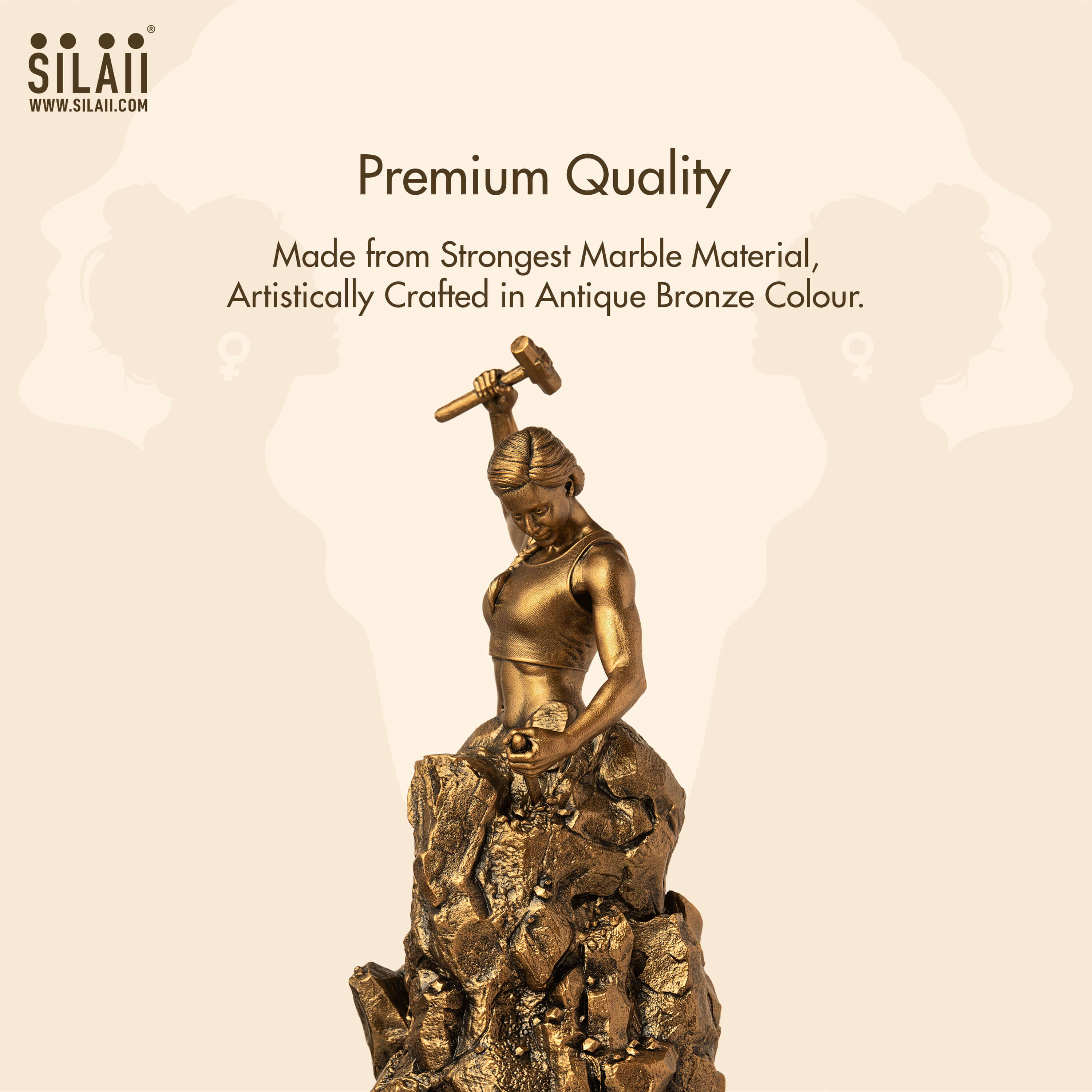
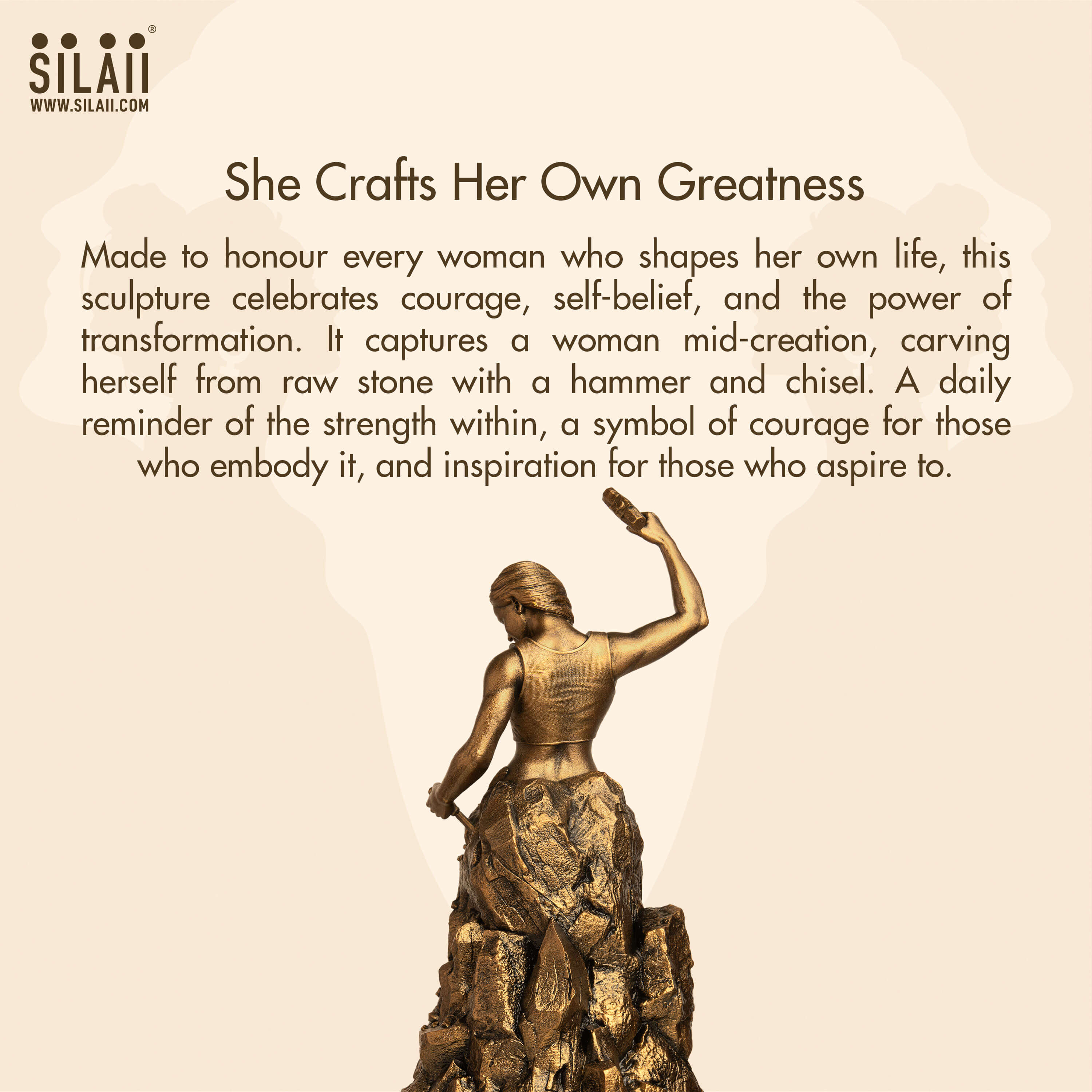
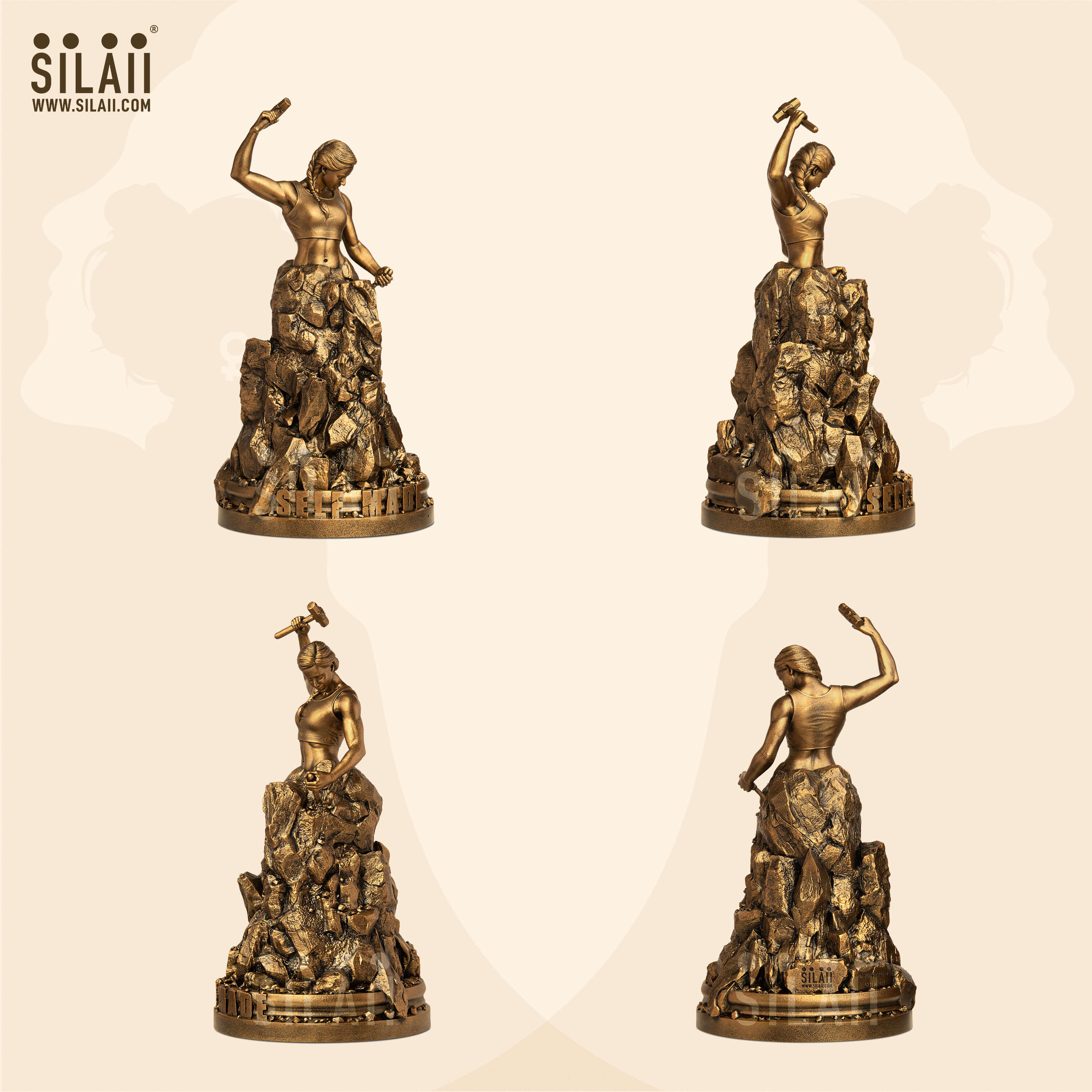
That is the quiet wonder of sculpture. The sculptor does not create something from nothing. The stone is already there. The possibility is already there. The artist simply has the vision, patience and courage to reveal it. Stroke by stroke, layer by layer, everything that does not belong is removed until what was waiting within finally becomes visible.
The stone does not become something else. It becomes what someone believed it could be.
Perhaps that is why we are still drawn to sculpture after thousands of years. Because somewhere within that transformation is something deeply familiar.
We too begin as possibilities.
None of us arrives in this world completely formed. We are shaped by what happens to us and, eventually, by what we choose to do with what happens to us. Life leaves its marks. People shape us. Love softens us. Loss gives us depth. Joy, failure, courage, fear and every experience in between leave their strokes upon us. Slowly, almost without noticing, we become someone.
But unlike a sculpture, we are never truly finished.
There is always something more within us. A possibility we have not discovered. A dream we have not allowed ourselves to imagine. A version of ourselves waiting for the right moment, the right person, the right experience or simply the courage to begin.
Maybe that is why art moves us. When we stand before a sculpture, we are not only looking at stone shaped by a human hand. We are looking at possibility made visible. We are seeing what can happen when imagination meets material, when belief meets patience, and when someone decides to begin before knowing exactly how the journey will end.
And perhaps, without realising it, that is what you have been doing with the stone in your hand. You have been carrying a piece of time, a piece of earth, a piece of something that existed before you and may exist long after you. But now, for this brief moment in its very long life, it belongs to your story.
The stone you hold now.
Take another look at the stone you are holding. Really look at it. Feel its weight in your palm. Notice its surface, its edges, the places where it is smooth and the places where it is rough. Think about how many years it took for it to become exactly what it is. Think about everything it may have passed through without ever knowing where it would eventually end up.
And now think about this: someone could look at the same stone and see nothing. Another person might see beauty. An artist might see a sculpture. And you might see something entirely different.
That is the power of possibility. The thing itself may not change. What changes is what we are able to see in it.
Perhaps the same is true of us.
Someone may look at you and see only what you are today. Someone else may see what you could become. And sometimes, the person who needs to see that possibility most is ourselves.
The stone does not ask whether it is worthy of becoming something more. It simply waits for the hand that can see it. The artist does not force the sculpture into existence. They begin with a belief that something is there, even before anyone else can see it.
Perhaps we need that belief in our own lives too. To believe that there is more within us than what the world can see today. To have the patience to be shaped by life without allowing life to decide our entire form. To have the courage to remove what no longer belongs. And to keep imagining, even when the final shape is still hidden.
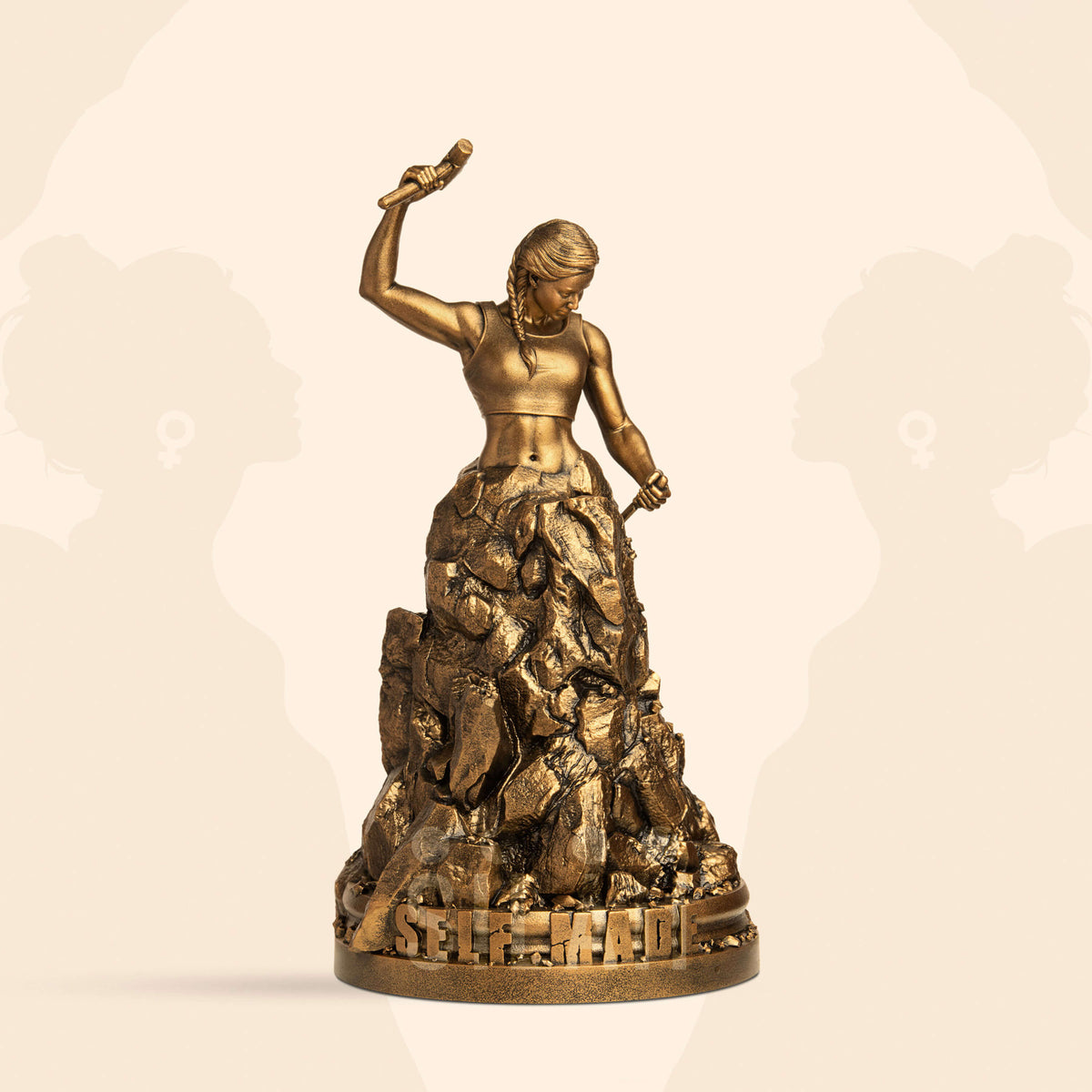
At SILAII, this is what we believe a sculpture can be. Not merely an object carved from stone, but a reminder of the extraordinary relationship between what exists, what we imagine and what we choose to bring into the world.
Every SILAII begins with a stone that has already lived a life of its own. It comes from the earth, carries its own character and waits in the hands of an artist. What follows is not simply the making of a sculpture. It is an act of seeing, an act of patience and an act of belief.
The artist looks at what is there and imagines what could be. And perhaps that is the most beautiful thing about stone. After everything it has witnessed, everything it has endured and everything it has been, it can still become something new in the hands of someone who believes.
So perhaps, when you look at the stone you hold now, don't just see a stone. See where it came from. See how far it has travelled. See the possibility within it. And then, perhaps, look at yourself in the same way.
Because you, too, have travelled through things that shaped you. You, too, carry marks that tell a story. You, too, have possibilities within you that nobody else can see yet.
You are not finished. Neither is the stone.
Everything began with a stone.
And perhaps the story was never really about the stone at all. Perhaps it was always about what we choose to see, what we choose to believe, what we dare to imagine, and what we finally have the courage to bring into being.
Love what is. Respect what was. Believe in what could be. Imagine what you want to become.
And then manifest it.
Describe your Custom Sculpture Requirement